Investing in Scope 2 carbon reduction with innovative and pre-emptive methods: reuse audit, digital twin & phased carbon negativity.
Seddon is committed to achieving overall net zero carbon emissions by 2050 in recognition of the UK government’s target. We’re passionate about how we can do things better to radically reduce carbon emissions, eradicate waste and look at alternative energy.
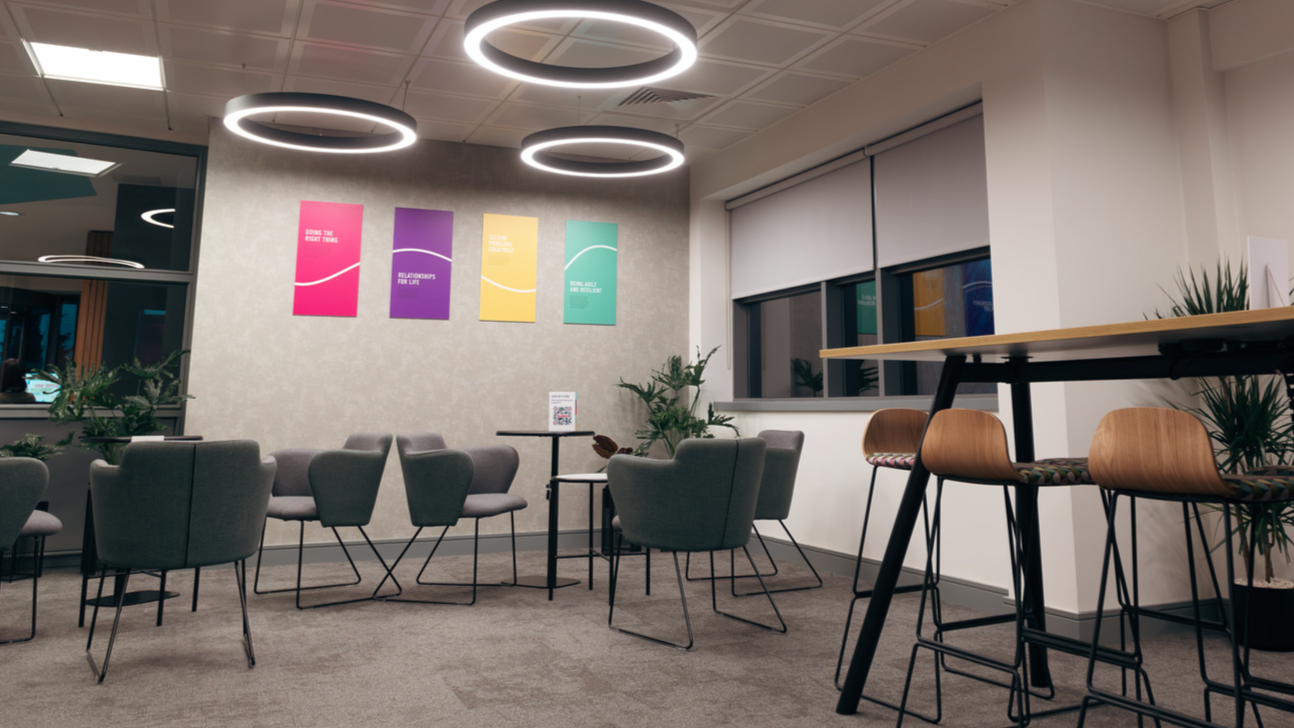
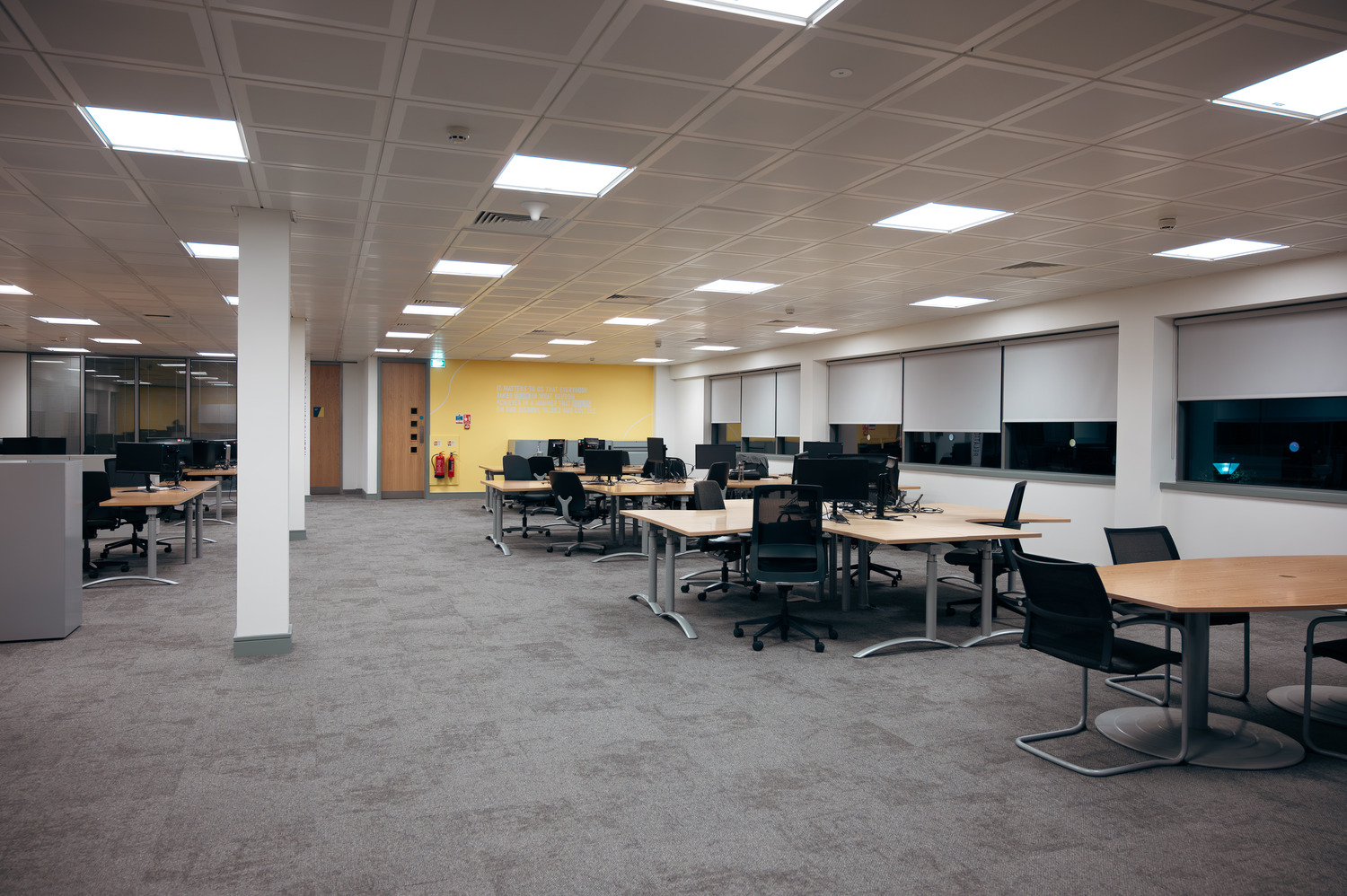
We are one of the first construction companies in the country to achieve a PAS2038 accreditation. Therefore, we saw the refurbishment of our Plodder Lane offices as our carbon reduction benchmark project, initiating a comprehensive decarbonisation programme aligning with our four-stage Decarbonisation Plan.
Phase 1 consisted of the full replacement of M&E systems with fully integrated smart controls and energy monitoring. Phase 2 will see the installation of new 265kW Solar Array with 61.4kW battery storage systems and 12-24 EV charging points.
Overall, following completion of all Phase 2, we are forecast to save 89.45 TCO2 at the Plodder Lane office and will be operationally Carbon Negative.
Pre-construction
Our PPN 06/21-compliant Carbon Reduction Plan (CRP) established structured, tapering Scope 1, 2 and 3 targets, aligned with the GHG Protocol.Specifically, we focused our refurbishment on reducing Scope 2 emissions, which arise from energy use, by maximising passive heat control and retention, eliminating gas, and installing Solar PV and heat pumps.
Seddon’s own Net Zero Heroes employee project team, whose mission is to reduce the carbon produced in our business and supply chain, worked with TwelveTree Consulting during the first stage of the programme to develop our office’s digital twin model, allowing us to carry out an in-depth, adaptive and interactive feasibility study.
 Digital Twin Technology allows for early identification of any potential issues, improved decisionmaking, reduced rework and statistics on carbon savings and whole lifecycle costing.
This enabled us to assess and analyse data from various variable factors, understanding the full impact of every choice made. Advanced data modeling allowed us to evaluate the environmental impact while factoring in the whole life cost, and to balance Seddon’s goals for both environment and financial feasibility.
Data modeling allowed us to create a clear roadmap to Net Zero, justify decisions with facts, and tackle the carbon vs. cost dilemma. Seddon undertook a circular economy ‘Reuse and Retain’ audit prior to strip-out to identify opportunities for embodied carbon savings, through assets which were still within lifespan or could have their lifespan extended.
Delivery
We sourced labour and materials within a 10-mile radius to support the local economy and cut travelrelated carbon emissions, choosing suppliers who shared our commitment to sustainability.
41.94% of all labour and materials were sourced within a 10-mile radius, reducing emissions and supporting the local economy.
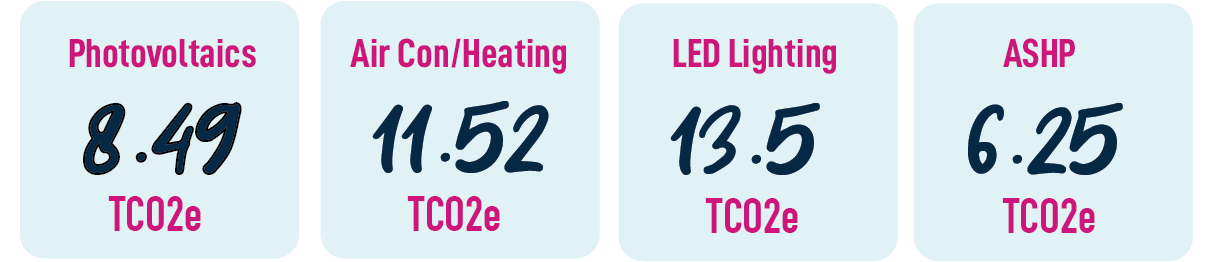
530W solar panels were installed on the roof as part of the complete M&E upgrade, and a light management system (LMS) allows us to optimise the use of artificial light where and when it is needed. LED lighting was significant in reducing our energy consumption, with the installation improving efficiency by 64% and a carbon reduction of 13.5 TCO2e.
Most of the waste collected from site during the refurbishments was mixed construction waste, followed by metals and timber. Other waste included plasterboard, bricks, cardboard, insulation, and hardcore.
Whichever waste stream, 100% of the project’s waste was recycled or diverted from landfill. By using Seddon’s joint venture recycling company, Circle Recycling, we were able to granularly monitor and appropriately segregated forms of waste—our waste strategy saved 54 TCO2e, in waste-related emissions.
The materials identified in our ‘Reuse and Retain’ works included:
- Cleaning and reinstalling ceiling grids and tiles
- Keeping meeting room glazing and partitions
- Retaining floor boxes
- Retaining existing condensate pipes
- Cleaning and reinstalling main duct runs
- Reusing all existing electrical containment
- Reusing desks and monitors
Reusing existing assets and extending their lifespan balances the additional embodied carbon of retrofits with a projects operational carbon savings, delivering more sustainable results.
Where new material was used, this was sourced with a focus on recycled and recyclable content where possible. Our ‘one-piece’ paste-the-wall graphics by Sign Supplier are made from recycled plastic, produce no waste during installation, and use environmentally friendly UV inks during the printing process. They also exceed BREEAM and WELL standards.
Overall, we were able to provide a showcase project incorporating as much of our decarbonisation work, reuse of existing materials, and local supply chain as possible. Through our delivery works, we were able to save:
Post Occupancy
As decarbonisation partners, we develop systems to monitor post-occupancy performance and provide roadmaps for further carbon reduction, as shown in our Plodder Lane refurbishment. In our main office, an advanced Building Management System (BMS) integrates real-time data from our Digital Twin and custom data loggers, tracking MEP performance, occupancy, and user habits. Our embedded sustainability team, Net Zero Heroes, then uses these insights to drive targeted projects and initiatives.
Our work has delivered significant financial benefits through sustainable technologies, with long-term savings from lower energy use and operating costs. The building’s usability and functionality have also improved, with enhanced air quality, comfort, and space optimisation. Additionally, the project has acted as an educational tool for both internal and external stakeholders on best practices for sustainable projects and meeting customer needs.